
Renewables Grid Initiative (RGI) welcomes the ongoing efforts of the European Union to address the impacts of climate change, including through the upcoming Integrated Framework for European Climate Resilience and Risk Management. Europe is the fastest warming continent and already today, faces severe impacts of climate change, including increasing frequency and intensity of extreme weather events, such as droughts, heatwaves, storms, floods and wildfires (Source: European State of the Climate 2024). The consequences of these events take social, environmental, and economic tolls on European societies, threatening the financial stability and well-being of communities, as well as natural ecosystems and infrastructure.
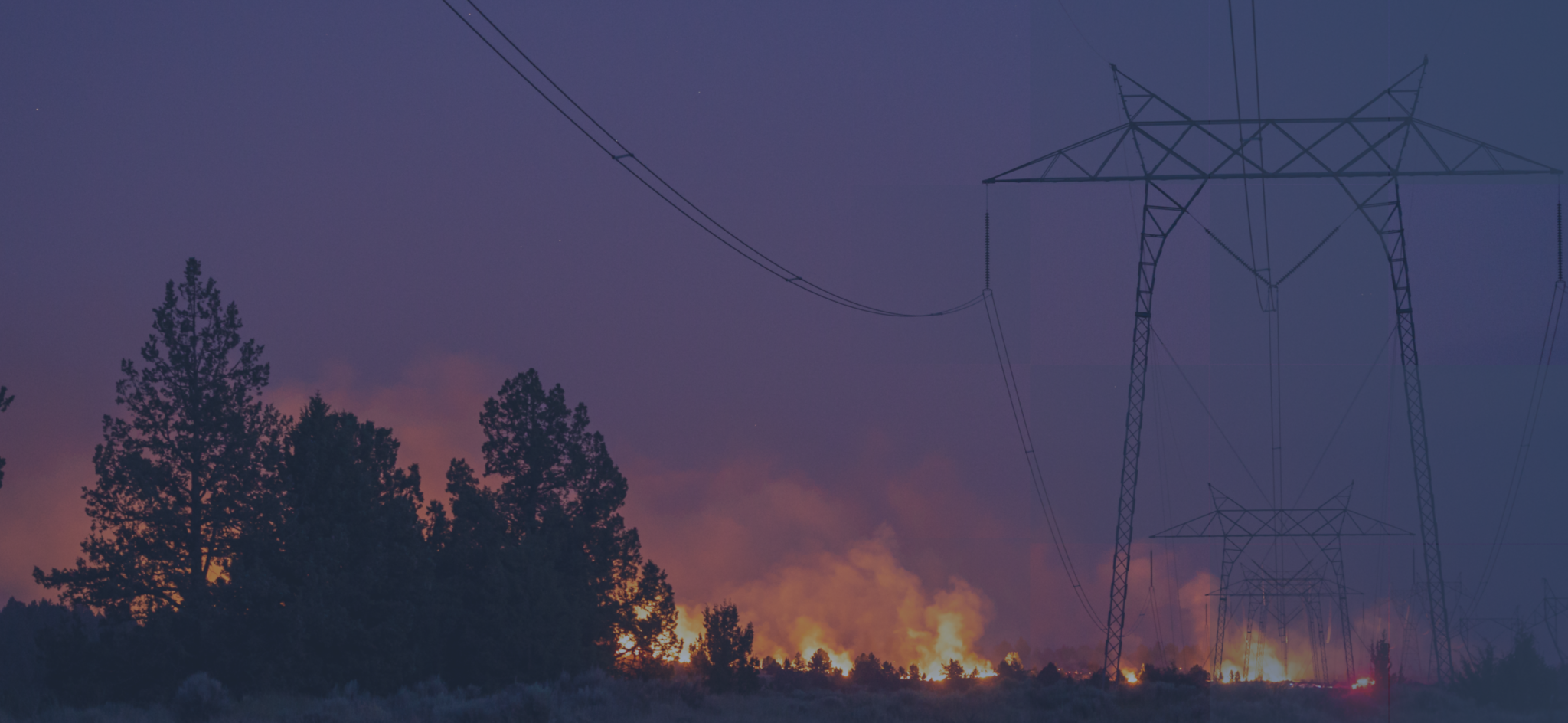
Electricity grids are also increasingly affected. This includes direct impacts on the physical infrastructure and impacts on the energy system at large. Extreme weather events can lead to collapse of pylons during storms, disruption of electrical substations during floods or damages of cables during wildfires. Changing weather patterns over short and longer periods of time have implications on electricity generation and demand, for example, excessive electricity demand for cooling during more frequent heatwaves. These evolving risks should be fully integrated into how electricity grids are planned, built and operated, and the financial considerations before, during and after climate hazards occur, should be duly considered.
Elia Group (Belgium’s TSO ETB and the German TSO 50Hertz) is enhancing physical resilience to climate change and extreme weather events, for example by reinforcing 1,700 pylons against storms in Germany; and equipping substations against flooding with measures such as water-pumps and water-resistant coating in Belgium. See more information here.
Anticipating future climate challenges and strengthening climate resilience of electricity grids is necessary to guarantee a decarbonised, secure, reliable and cost-efficient energy system in Europe. Initiatives and projects addressing climate resilience for electricity grids are emerging at both the EU and national levels. The upcoming Integrated Framework should leverage these efforts and provide the needed tools to enable, advance and streamline their implementation.
Resilience by design
Planning and designing climate resilient grids require standardised definitions and assessments of ‘risk’. Preparing electricity grids for climate change and extreme weather events have historically focused on technological and engineering solutions for the physical infrastructure at the project level. More recently, electricity grid operators and policymakers intensified efforts to address climate risks at a system level. This includes improving the forecasting of future hazards and their impacts, as well as developing systems and protocols to ensure effective responses to secure grid operation following such events.
The Spanish TSO, Red Eléctrica de España (REE), developed a Wind Map of Spain’s territory to identify areas prone to strong winds, enabling better assessment of the risks when developing new transmission lines and reinforcing existing ones. See more information here.
These developments require a robust knowledge base on how to define climate hazards and risks, and assess their impacts, including the associated costs of addressing and managing them. This should also account for cascading effects and combined impacts of multiple hazards across regions and assets. Such an approach would allow the effective allocation of resources for mitigating climate change impacts.
Terna, the Italian TSO, developed the Pole-Mounted Switchgear (OMP) to provide a flexible and smart solution to improve electricity transmission management, especially in remote areas prone to climate risks such as extreme cold, storms and floods. See more information here.
While future climate risk assessments and related measures for electricity grids should be grounded in a shared understanding and common definitions at both EU and Member State levels, they should maintain sufficient flexibility to adapt solutions to local contexts.
RTE, the French TSO, re-designed and elevated a substation on the French-Flanders coast to address the evolving risks from coastal flooding and sea level rise expected in this area. See more
information here.
This calls for transparent and accessible knowledge-sharing platforms that provide practical risk assessment tools and examples of best practices. Such platforms should enable input from a wide range of stakeholders, including civil society and local communities, to improve existing knowledge and support the development of more accurate and cost-efficient climate resilience solutions for electricity grids.
Designing climate resilient grids will also require grid technologies and components to integrate adaptation considerations early on. In doing so, the infrastructure will be more resilient to future extreme events and changing climate conditions. This should be applied across all development stages, from the initial design of new electricity grid infrastructure to the reinforcement of existing assets.
At the same time, global supply chains disruptions, caused by geopolitical tensions, increasing competition and scarcity of certain components and resources, makes effective implementation of adaptation and resilience measures for electricity grid infrastructure more costly and challenging. This should be addressed at both, system and projects levels, including through circular approaches and strengthening European and local industrial bases. The upcoming EU Circular Economy Act can provide guidance and the tools to set relevant market standards, including procurement, and processes for materials able to enhance climate resiliency of future electricity assets. In parallel, innovation should be further incentivised in a way that would allow for the development of new, cost-efficient solutions. Overall, the adjusted
and aligned regulatory frameworks need to allow, support and remunerate
development and fast implementation of hands-on solutions and pilot projects, which would reinforce both, climate resilience and circularity.
The TSO Innovation Alliance brings together eight European TSOs – Elia Group’s ETB and 50Hertz, Terna, Amprion, RTE, TenneT, Red Eléctrica and Swissgrid. It was launched in 2025 to jointly accelerate innovation for a more resilient, efficient and forward-looking electricity system. “Weather and Grid Resilience” is the first focus, with two joint proof-of-concept projects to be concluded in The first project is a platform for extreme weather events’ diagnostic and forecasting, and the
second project is on climate-hazard back-testing and exposure interpretation. See more information here.
Inclusion and collaboration
To increase social acceptance of the investments needed for climate-proofing the grid and allow for better utilisation of local knowledge and solutions, the engagement of local communities and civil society should be strengthened. This has the potential to reduce costs and create social and environmental benefits stemming from the implementation of adaptation measures. For this to happen, regulatory recognition of engagement activities aiming at increasing climate adaptation and resilience carried out by grid operators needs to be ensured.
Furthermore, cross-sectoral collaboration could further optimise processes and costs. In many cases, infrastructure such as electricity grids, railways, highways, broadband, and water supply and other management systems occupies the same space or are located in close proximity. Stronger collaboration and sharing climate risk assessments and adaptation solutions against the same climate-hazards can further reduce costs and shorten implementation time for grid and other infrastructural projects. A non-binding EU guidance, shared databases or platforms for climate hazards and risk assessments that incorporate relevant and common information for different sectors, or a repository of good practices for technical assistance (including methodologies and solutions) could further support such cross-sectoral efforts.
Aligning adaptation with nature protection
When planning and implementing climate adaptation measures for electricity grid infrastructure, nature-based solutions (NBS) should be prioritised or at least considered on an equal footing with technological and engineered approaches. NBS contribute to the conservation and restoration of ecosystems, enhancing biodiversity and strengthening the resilience of the surrounding environment. Hence, NBS offer a resource-efficient and flexible way to address climate risks, as they can be adapted to evolving local conditions with a high potential to reduce overall costs (More on GINGR’s Principles). Beyond their primary function, they provide multiple co-benefits by supporting local communities with economic opportunities and increase social well-being, maintaining access to green spaces, and preserving natural landscapes (Read RGI’s CLB Brochure for more information). For example, conserving natural ponds along grid routes can help mitigate flooding and reduce wildfire risks, while managed grazing can benefit local farmers and control vegetation naturally, limiting the need for mechanical intervention. Beyond that, NBS can provide carbon offsetting,
or generate local redevelopment as well.
REN, the Portuguese TSO, converted grid corridors into areas for farm animals’ grazing. Grazing reduces the need for mechanical vegetation management, lowering the risk of wildfires around the infrastructure, while supporting local communities and local farmers’ needs. See more information here.
Effective support of NBS requires clearer understanding of the related costs to grid operators and other stakeholders, and the benefits and value-creation of NBS solutions, including socio-economic and environmental ones, in comparison to traditional solutions. Here also, EU and Member States’ support for knowledge sharing and information provision mechanisms is crucial, in line with recognition of NBS by competent authorities. By delivering environmental, social, and economic value
alongside climate adaptation, NBS represent a holistic and forward-looking approach to climate resilient electricity infrastructure.

More on RGI’s recent work accompanying this statement
contact
Dr. Andrzej Ceglarz
andrzej[at]renewables-grid.euDirector – Energy Systems

Dr. Ira Shefer
ira[at]renewables-grid.euManager – Energy Systems

Alexandros Fakas Kakouris
alexandros[at]renewables-grid.euSenior Manager – Energy and Policy Systems

Dr. Andrzej Ceglarz
andrzej[at]renewables-grid.euDirector – Energy Systems
Dr. Ira Shefer
ira[at]renewables-grid.euManager – Energy Systems
Alexandros Fakas Kakouris
alexandros[at]renewables-grid.euSenior Manager – Energy and Policy Systems
explore RELATED resources