

 09 June 2026
 09:00 – 12:00
 Maison de la Poste, Rue Picard 7, 1000 Brussels, Belgium
Organised by RGI, DLR and Aarhus University
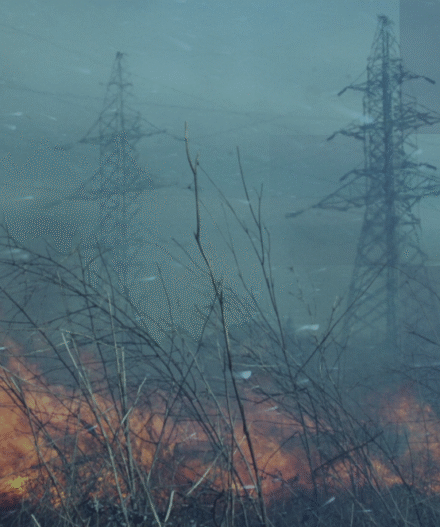
The electricity system is increasingly facing significant impacts from climate change and extreme weather events, requiring adequate planning to achieve a resilient European electricity grid.
In this context, the European Commission initiative, Destination Earth (DestinE) aims to develop a highly accurate digital model of the Earth to monitor and predict the interaction between natural phenomena and human activities.
For the energy sector, several activities within DestinE have been started to demonstrate the capabilities of the Digital Twins, including Use Cases, ML Demonstrators and Pilot Services. Efforts have been made to expose these activities, their outputs and relevance to energy-sector stakeholders and decision-making processes, including the 2024 Webinar ‘Modelling for climate resilience and adaptation’. However, more active engagement is required to better align these activities with the changing needs of energy users and changing regulatory and policy requirements in Europe.
Engaging users with DestinE’s energy research
DestinE’s upcoming public workshop aims to strengthen cooperation and co-design activities of the initiative’s energy research with relevant stakeholders on a technical level.
Workshop discussions will inform DestinE’s energy research applications and future avenues, identifying how to support industry and other stakeholder’s pro-active contribution to designing and operating the future European energy system.
To achieve this, the workshop will be held in a “World Café” format, in which participants will have the opportunity to discuss different topics such as machine learning, extreme events and more in small groups.

This workshop complements a dedicated session on energy during the DestinE 5th User eXchange event (DestinE UX5) in Brussels on 10 June (14:05 – 15:05 CET). Participants of this public workshop must register for the UX5 event in due time to enter the venue. Find more information here.
Register now to join the discussion
Agenda
About DestinE
Destination Earth (DestinE) is a European Union funded initiative launched in 2022, with the aim to build a digital replica of the Earth system by 2030. The initiative will be jointly implemented by three entrusted entities: the European Centre for Medium-Range Weather Forecasts (ECMWF) responsible for the creation of the first two ‘digital twins’ and the ‘Digital Twin Engine’, the European Space Agency (ESA) responsible for building the ‘Core Service Platform’, and the European Organisation for the Exploitation of Meteorological Satellites (EUMETSAT), responsible for the creation of the ‘Data Lake’.

contact
Dr. Ira Shefer
ira[at]renewables-grid.euManager – Energy Systems

Dr. Andrzej Ceglarz
andrzej[at]renewables-grid.euDirector – Energy Systems

Sara Gaçe
sara[at]renewables-grid.euJunior Consultant

Dr. Ira Shefer
ira[at]renewables-grid.euManager – Energy Systems
Dr. Andrzej Ceglarz
andrzej[at]renewables-grid.euDirector – Energy Systems
Sara Gaçe
sara[at]renewables-grid.euJunior Consultant
topic-related resources