

 01 July 2026
 15:00 – 16:30 CEST
 Online
Organised by RGI & GINGR
Co-organised with GINGR, the second session of our webinar series, Connecting Energy, Nature & People, focuses on how Cultural Ecosystem Services can support more inclusive, transparent, and adaptive approaches to electricity infrastructure planning.
As governments and utilities accelerate investment in renewable energy and electricity grids, there is growing recognition that infrastructure planning must move beyond technical performance and ecological compliance alone. Electricity corridors increasingly function as shared socio-ecological landscapes, shaping not only biodiversity outcomes, but also how communities experience, value, and relate to their local environments.
While biodiversity metrics, ecosystem accounting, and resilience indicators are becoming more common in grid planning, Cultural Ecosystem Services (CES) remain significantly underrepresented. CES refer to the non-material benefits people derive from ecosystems, including aesthetic appreciation, recreation, education, identity, spiritual meaning, place attachment, and psychological well-being. Research increasingly shows that these values often play a decisive role in shaping public perceptions of infrastructure, influencing social acceptance, trust, and long-term legitimacy.
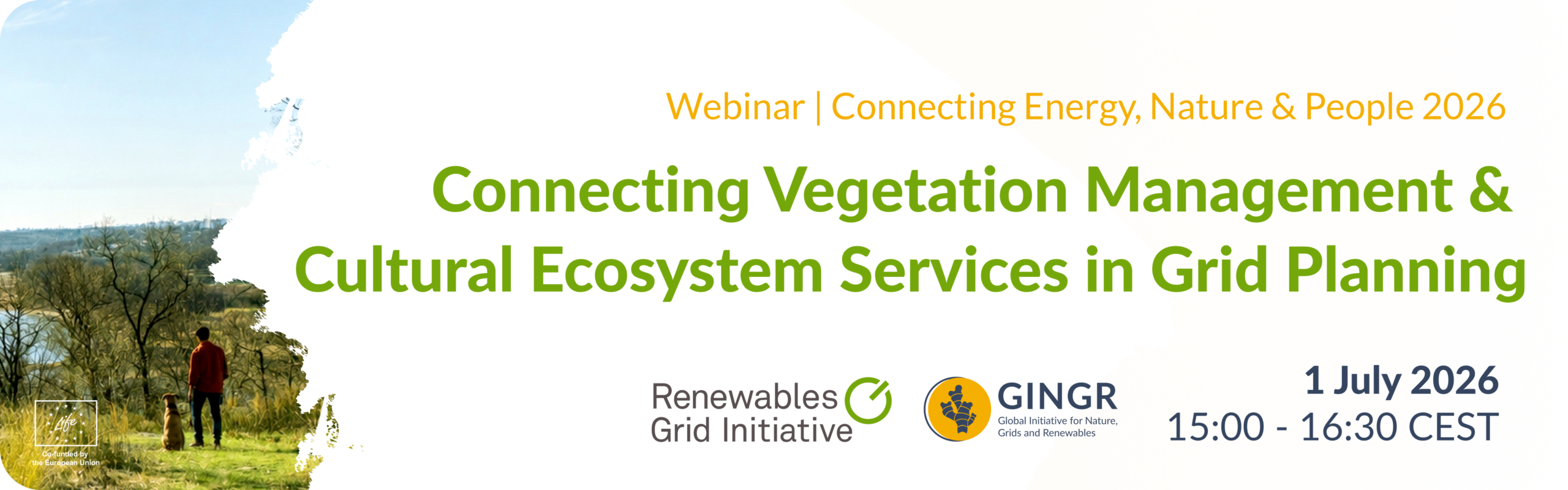
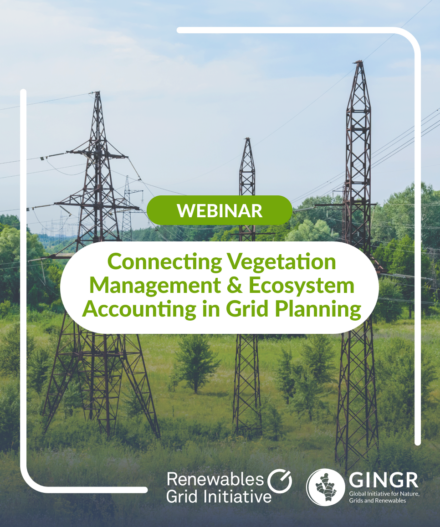
Connecting Vegetation Management & Cultural Ecosystem Services in Grid Planning
Co-organised with the Global Initiative for Nature, Grids and Renewables (GINGR), the webinar will explore how Cultural Ecosystem Services can support more inclusive, transparent, and adaptive approaches to electricity infrastructure planning. Building on lessons from Integrated Vegetation Management, environmental psychology, ecosystem accounting, and participatory governance, the discussion will examine how vegetation management choices can influence not only ecological performance but also how communities perceive biodiversity, landscape quality, and stewardship.
Speakers will share practical examples of social and ecological monitoring in transmission corridors, discuss emerging methodologies such as participatory GIS, surveys, interviews, and deliberative valuation, and reflect on how cultural values can be embedded into regulatory frameworks, reporting systems, and Nature-Positive infrastructure design.
The webinar will also connect these insights to the evolving GINGR Framework, which seeks to develop globally aligned methodologies for measuring biodiversity gains, social legitimacy, and co-created community benefits in renewable energy and grid infrastructure.
Join us on 1 July, 15:00-16:30 CEST, as we explore how electricity infrastructure can contribute not only to climate and biodiversity goals but also to stronger relationships between people, nature, and the landscapes they share.
Event Speakers
Dr. Megan Garfinkel
Assistant Professor | Chicago State University
Adrián Maté
Environmental Coordinator | Renewables Grid Initiative (RGI)
Dr. Izabela Delabre
Senior Lecturer in Environmental Geography | Birkbeck, University of London
Dr. Kim Zoeller
Postdoctoral Fellow at the Centre for Sustainability Transitions (CST) |Stellenbosch University
Register here
contact
Annika Lilliestam
annika[at]renewables-grid.euCoordinator – GINGR

Annika Lilliestam
annika[at]renewables-grid.euCoordinator – GINGR
topic-related resources


Co-funded by the European Union. Views and opinions expressed are however those of the author only and do not necessarily reflect those of the EU or LIFE Programme. Neither the EU nor the granting authority can be held responsible for them.