
Amid the drive for rapid decarbonisation, offshore wind energy has emerged as a central pillar in the climate strategies of North Sea countries. However, the expansion of offshore infrastructure poses new risks to already stressed marine environments. This dual challenge, advancing clean energy while safeguarding marine ecosystems, calls for integrated, just, and inclusive governance approaches.
The JustWind4All (JW4A) project, funded under Horizon Europe, responds to this need by exploring how energy justice can guide a fair and sustainable energy transition. One of its key approaches is the Wind Forum, a network bringing together stakeholders from the local, regional, national, and the European Union (EU) levels across policy, community, markets, and third sectors to meet, collaborate, and exchange knowledge. The Wind Forum has five regional Wind Labs, which serve as testing grounds for innovative approaches and technologies in real-world contexts.
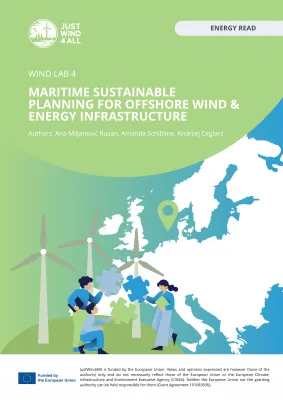
This Energy Read summarises the findings from the Wind Lab 4, focused on advancing Maritime Sustainable Planning as a tool to align environmental, social, technical, spatial, and governance considerations. Maritime Sustainable Planning encompasses processes which take place during Maritime Spatial Planning (MSP) and offshore wind and grid project planning.
This Energy Read summarises the findings from the Wind Lab 4, focused on advancing Maritime Sustainable Planning as a tool to align environmental, social, technical, spatial, and governance considerations. Maritime Sustainable Planning encompasses processes which take place during Maritime Spatial Planning (MSP) and offshore wind and grid project planning.
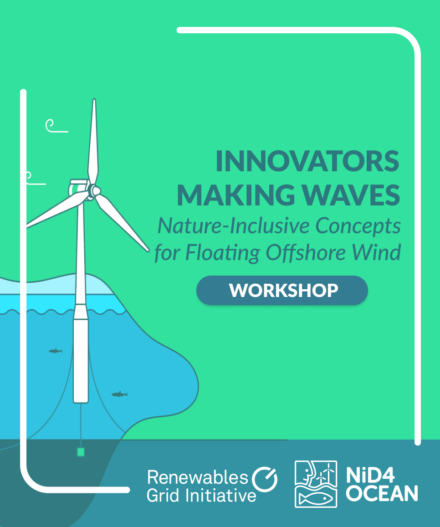
Wind Lab 4 conducted seven co-production activities across diverse stakeholder groups, producing actionable insights and guiding principles for just and nature-inclusive offshore wind and grid development. During each co-production activity, key insights and reflections emerged through carefully facilitated exchanges that encouraged open dialogue, compromise, and mutual learning.


contact
Dr. Andrzej Ceglarz
andrzej[at]renewables-grid.euDirector – Energy Systems

Dr. Andrzej Ceglarz
andrzej[at]renewables-grid.euDirector – Energy Systems
topic-related resources