

 2025
2025
 Netherlands
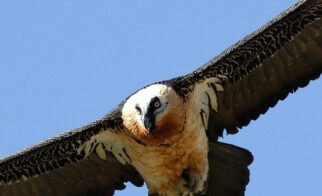
The Spanish TSO Red Eléctrica de España and the NGO Foundation for the Conservation of the Bearded Vulture have introduced a project to provide safer habitat for the Bearded Vulture by installing bird diverters on grid infrastructure. The diverters are estimated to reduce collisions by 70%.
Highlights
01
The installed bird diverters – rotating and cross-shaped, using light reflection to ward birds away from grid infrastructure – are estimated to reduce collisions by 70%.
02
The project’s methods have been replicated in various regions, including Andalusia, Extremadura and Gipuzkoa.
03
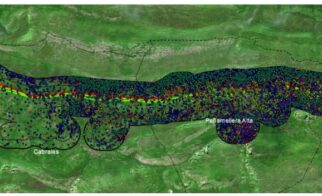
The project involved identifying 446 km of critical risk to Bearded Vultures.
Main Information
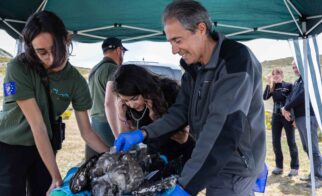
This project, by Spanish TSO Red Eléctrica (REE) and the NGO Foundation for the Conservation of the Bearded Vulture, aims to provide safer habitat for the Bearded Vulture, by placing diverters on grid infrastructure.
The project involves installing rotating and cross-shaped bird diverters to ward birds away from dangerous infrastructure such as power lines. The diverters use movement and light reflection to direct birds away from the infrastructure and are the type proven to be the most effective, preventing collisions by an estimated 70%.
The initiative began following the collision of a reintroduced Bearded Vulture with an REE power line located outside the Natura 2000 network. This prompted REE to better understand their flight patterns and design a plan for bird markers along the power lines.
They then worked with the Foundation for the Conservation of the Bearded Vulture (FCQ) on a plan to support the conservation of the species, which is classified as Near Threatened on the IUCN Red List. FCQ provided REE with over 3.4 million geolocation records for Bearded Vultures, which REE combined with grid infrastructure information. The subsequent GIS system they created helped REE to identify stretches amounting to 446 km deemed the most dangerous areas and therefore the priority spots for the conservation measures. Between 2022 and 2025, they placed diverters along all 446 km, providing an example of evidence-based conservation planning. Additionally, the signaling strategy has been expanded based on a new data analysis. As a result, Red Eléctrica will proceed with installing diverters in newly identified high-risk areas for the Bearded Vulture.
The practice has proved to be transferable. Several regional governments have already replicated the model developed by REE and FCQ in Andalusia, Extremadura and Gipuzkoa (Basque Country). They have shared data on other soaring bird species, including eagles and other vulture species, so that REE can develop similar action plans. The initiative has also received attention internationally, with Cyprus’ electricity company and Birdlife Cyprus beginning the marking of 16 km of power lines in a Special Protection Area inspired by the REE-FCQ model.

other practices