
 2025
2025
 Belgium
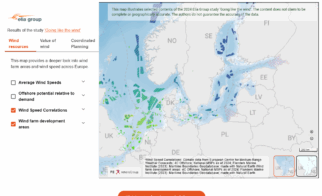
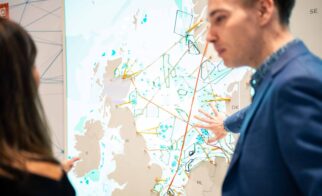
Elia group developed a new spatial planning tool and a five-step approach for a financing and funding framework through an offshore investment bank. By discussing and quantifying key levers, the practice supported sound decision making for sustainable offshore wind development. Elia Group also collaborated with over 50+ external stakeholders to enhance impact and ensure effective results dissemination.
Highlights
01
Shows that Europe’s energy transition costs could be reduced by over €1,000 billion from 2030-2050 with international collaboration, investment de-risking, and coordinated spatial planning.
02
Among the first to apply a wake analysis with a cross-border scope, emphasising the importance of collaboration beyond financing and grid planning.
03
Data and results publicly available, supporting capacity building and enabling important knowledge spillover.
Main Information
The practice was developed to address key issues for the achievement of EU’s climate targets: How can Europe connect up to 500 GW offshore wind to supply customers with affordable green electricity and anchor its industry on the continent? How can we onboard nature protection in the strategic planning of projects? Elia Group saw a gap between targets and actual project implementation, impeded by spatial planning constraints, financing, funding challenges, cost sharing discussions, supply chain readiness, and efficiency (e.g. wake losses). Their practice starts with acknowledging these challenges are interlinked and tackles them in a holistic manner.
This practice has developed a toolbox to address the fact there is no one-size-fits-all solution for offshore analyses. It aims to solve key issues, such as bridging the capacity gap and addressing a lack of overarching development framework for offshore wind projects, high project costs, and disparate national planning and funding mechanisms. With input from over 50+ external stakeholders, they developed new tools and workflows for GIS analyses for spatial planning and routing of cables. Elia Group’s overall holistic approach aims to to push the topical boundaries of what a TSO traditionally would do to meet the EU’s offshore wind targets, with two scientific publications on the approach published.