
 2022
2022
 Spain
Spain
This practice reflects the energy efficiency first (EE1) principle in a system-wide approach, applying it to all the steps of the transmission network planning. Robust results are obtained using powerful tools enabling the selection of the best alternative with the lowest environmental and economic impact.

Highlights
01
Detailed data collection is key to complete an analysis which enables an identification of system needs and ulterior project definition.
02
Solutions include options focusing on maximising the use of the existing grid by means of new tools and technologies.
03
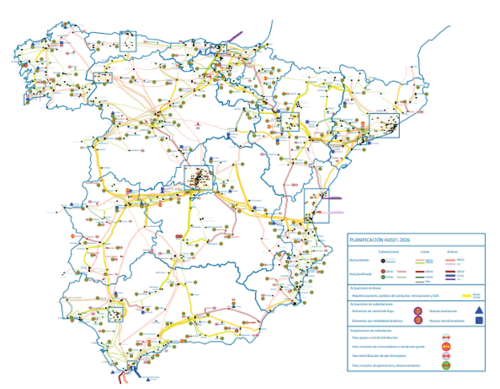
This practice has led to a grid plan with more than 70% of the proposals directed to the improvement of the existing grid use.
Main Information
The practice only considers alternatives that optimise the use of the existing network. If these alternatives are insufficient to meet the identified needs, alternatives that consider new infrastructures are evaluated; with new corridors only as last option.
A cost-benefit analysis (CBA) is performed using a detailed model of the system, including joint market and network simulations, using optimisation tools, and considering all the possible hourly situations within a representative year to ensure the robustness of the results. The alternatives include recent innovations such as automatic generation downloading for renewables, Dynamic Line Rating (DLR), and batteries working as integrated network components.
Red Eléctrica de España is the sole transmission agent and operator (TSO) of the national electricity system in Spain.
other practices