

 2025
2025
 Portugal
E-REDES introduced Integrated Vegetation Management (IVM), with the purpose of benefitting biodiversity, delivering ecosystem services and promoting the safeguarding of safety distances between vegetation and lines. Working with CoLAB ForestWISE, the project has identified 107 low-flammability plant species that offer ecological and economic benefits. Supported by digital tools and pilot projects, the IVM activities seek to convert fuel management strips into resilient, productive landscapes.

Highlights
01
107 fire-resilient plant species identified to protect 60,000 km of grid corridors across Portugal.
02
43,000 hectares mapped for compatible species with biodiversity and carbon monitoring baselines established.
03
Digital dashboard and pilot projects launched with landowners and authorities from 2022 to 2025.
Main Information
Portugal faces growing wildfire risks as climate change intensifies, posing a major threat to biodiversity in the country. E-REDES has responded by developingIntegrated Vegetation Management (IVM) into their operations,enabling a nature-based approach that protects infrastructure while regenerating ecosystems.
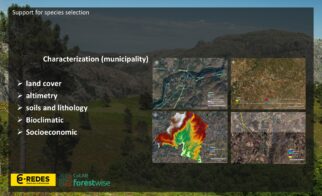
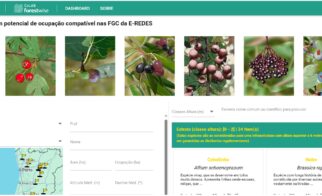
In partnership with CoLAB ForestWISE, E-REDES identified 107 fire-resilient, low-flammability species suitable for fuel management strips beneath power lines. These species combine biodiversity, carbon capture, and local economic value. A digital platform now supports landowners and municipalities with management models, biodiversity data, and business cases.
IVM transforms traditional fuel clearance areas into multifunctional landscapes that promote resilience, safety and rural development. Supported by national authorities ICNF and AGIF, the practice has mapped over 43,000 hectares for compatible flora and launched pilot projects across Portugal.
The initiative offers a replicable model for Mediterranean and fire-prone regions worldwide. Future work will focus on scaling implementation, improving monitoring through remote sensing, and securing incentives for large-scale adoption. By linking grid safety to biodiversity and local value creation, E-REDES seeks to redefine how energy infrastructure coexists with nature.

other practices