
 2025
2025
 Germany
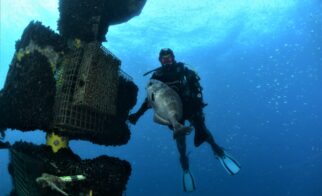
Seeking to align renewable energy development with EU biodiversity goals, Ecocean partnered with Ocean Winds to install 32 biohut ‘fish hotels’ on the platform for a EFGL pilot wind farm off the French Mediterranean coast. Biohuts are steel cages filled with natural materials that mimic habitats for marine life. Representing the first large-scale use of biohuts on a floating offshore wind farm, early results show the project has enhanced local biodiversity by creating habitat for marine species (fish, crustaceans and molluscs).

Highlights
01
First floating offshore wind farm to integrate biohut modules, the only nature-inclusive design tailored to floating infrastructure.
02
Biohuts are steel cages with oyster shells, stones, and coconut fibers that attract marine life.
03
Trials showed higher species richness and nursery use by fish, proving potential for coexistence with marine ecosystems.
Main Information
Offshore wind energy is expanding in the Mediterranean, but floating turbines planned for the region currently offer limited ecological benefits. Unlike bottom-fixed turbines, they lack complexity and fail to support natural habitat formation.
To address this gap at the EFGL pilot windfarm, Ecocean and Ocean Winds applied nature-inclusive design (NID) principles by installing biohuts – modular steel cages filled with oyster shells, stones, and coconut fibres that mimic rocky nursery habitats. These units add essential complexity to floating infrastructure, enabling marine species to colonise areas that would otherwise remain barren.
Launched in 2012, the biohut project pursues several goals. Beyond creating refuges and feeding grounds for ground-dwelling fish, invertebrates, and filter feeders, it also aims to establish a replicable NID model for the floating offshore wind sector. Long-term ecological monitoring provides evidence of performance and informs future innovation. Finally, the project engages stakeholders in co-design, deployment and communication of biodiversity benefits.
Early results are promising: baseline trials showed greater species richness and nursery use by fish. The project partners intend to conduct further monitoring up to 2030 to better understand the environmental benefits.

other practices