
 2025
2025
 Germany
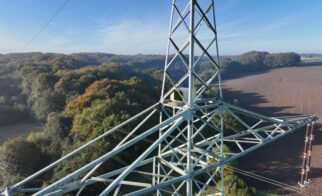
This project focuses on using AI to detect bird boxes on electricity transmission infrastructure, enhancing ecological oversight while supporting compliance with environmental legislation and infrastructure maintenance. Amprion’s analysis shows strong performance by the models in identifying bird boxes in images.
Highlights
01
Amprion applies deep learning models to existing aerial images to detect the location of bird boxes.
02
The initiative supports conservation goals and compliance with environmental legislation.
03
The system can be extended to other bird nests or other ecological features.
Main Information
This project by German TSO Amprion uses AI to detect bird boxes on electricity transmission infrastructure, enhancing ecological oversight while supporting compliance with environmental legislation and infrastructure maintenance.
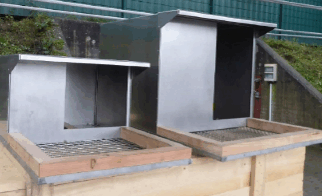
Transmission infrastructure intersects with natural habitats and therefore often requires mitigation measures to balance grid reliability with biodiversity conservation. Bird boxes support conservation goals by increasing nesting opportunities, which can reduce electrocutions and electrical faults on the lines.
Traditionally, the location of the boxes has been documented only partially in manual reports, which lack specific spatial and visual data leading to data inconsistencies. To address this, existing aerial images from helicopter flights, drones and field uploads are used to create a training dataset for deep-learning models. Once trained, the model detects nesting boxes on new images automatically, enabling rapid mapping and assessment across the grid. The deep learning model helps to ensure compliance with environmental regulations and ecological monitoring.
Amprion is sharing the methods and findings with other TSOs in workshops. The models show potential to be reused for other use cases, such as identifying bird nests on energy infrastructure or other ecological features.

other practices