


Launched in 2023 by the European Commission, the EU Pact for Engagement is part of the Action Plan for Grids to ensure early, regular and meaningful stakeholder engagement in electricity grid development. As such, it acknowledges the importance of engagement activities for grid deployment.
Accelerating electricity grids is crucial to meet the European Union’s decarbonisation goals. Acknowledging the importance of engagement activities within this context, the European Commission launched the Pact for Engagement in 2023. As part of the Action Plan for Grids, it aims to ensure early, regular and meaningful stakeholder engagement in electricity grid development.
Implementing the Pact for Engagement
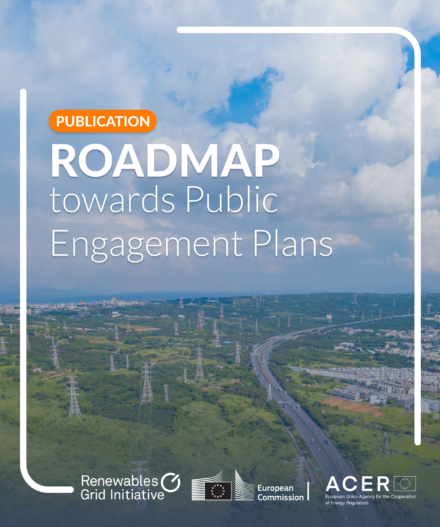
Together with the European Commission (DG ENER) and the European Union Agency for the Cooperation of Energy Regulators (ACER), RGI has been leading a multi-stakeholder process aiming at regulatory enhancement of stakeholder engagement activities in grid development.


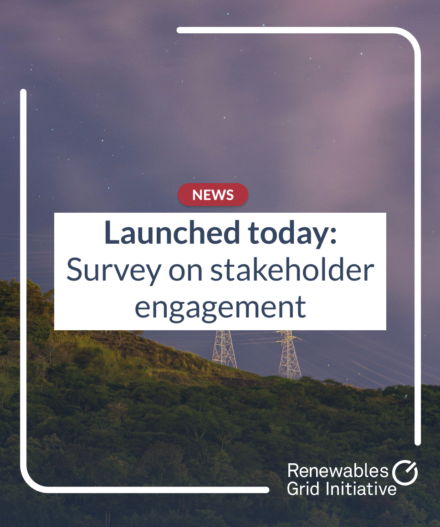
In early 2025, a joint survey between RGI, DG ENER and ACER was launched, aiming at closing the knowledge gap on regulatory practices and differences across Europe.
The survey results presented at the 2025 Infrastructure Forum led to a specific task included in the the Forum’s Conclusions, inviting the Commission, RGI and ACER, in collaboration with EU DSO Entity, the European Network of Transmission System Operators for Electricity (ENTSO-E), and other stakeholders, to co-create a roadmap for the development of Public Engagement Plans (PEPs).
Public Engagement Plans
PEPs are intended to:

Support grid operators on how to plan, implement, and evaluate public engagement activities throughout a project’s cycle.

Provide transparency and comparability across Member States and regulatory environments.

Enable learning and continuous improvement, supported by peer review and practice sharing.
Developing PEPs is a co-design, inclusive and transparent process with active participation and contribution from actors such as transmission system operators (TSOs), distribution system operators (DSOs), civil society, regulators and policymakers.
Led by the EU Commission, RGI and ACER, this process consists of two main activities:
01
Regular meetings of Pact for Engagement stakeholders, with rotating chairmanship, which provide a safe and open space to share knowledge, discuss solutions and ask questions in relation to stakeholder engagement practices, steered by 10 Guiding Principles endorsed at the 2024 PCI Energy Days.
02
Dedicated focus group meetings bringing together selected grid operators, regulators and policy makers that have been discussing and co-developing a draft roadmap for PEPs.
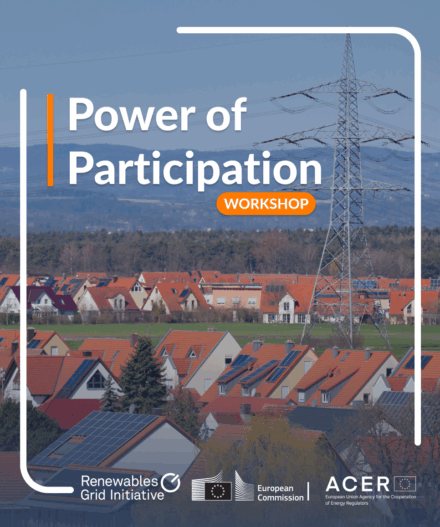
The intermediate results have been presented and discussed at the ‘Power of Participation’ public workshop in October 2025. The final version was presented at the 2026 Infrastructure Forum in May 2026 in Copenhagen.

Publications & outcomes
contact
Stephanie Bätjer
stephanie[at]renewables-grid.euDirector – Communication

Dr. Andrzej Ceglarz
andrzej[at]renewables-grid.euDirector – Energy Systems

Dr. Ira Shefer
ira[at]renewables-grid.euManager – Energy Systems

Stephanie Bätjer
stephanie[at]renewables-grid.euDirector – Communication
Dr. Andrzej Ceglarz
andrzej[at]renewables-grid.euDirector – Energy Systems
Dr. Ira Shefer
ira[at]renewables-grid.euManager – Energy Systems
topic-related resources


Co-funded by the European Union. Views and opinions expressed are however those of the author only and do not necessarily reflect those of the EU or LIFE Programme. Neither the EU nor the granting authority can be held responsible for them.