
 07 November 2018
 Berlin
Organised by RGI
While the Paris Agreement has set clear targets for the reduction of greenhouse gas emissions, countries have developed very different strategies how to achieve them. However, one thing is clear: a timely decarbonisation of the power sector will be indispensable. This includes a progressive shift away from conventional fossil sources, a focus on strong and flexible system operation and the secure integration of high shares of renewables.
In this context, some of the biggest economies in Europe have recently announced coal phase out goals and strategies, among them the UK, Italy and France. The debate about a coal phase out plan in Germany is ongoing and should be concluded in the coming months.
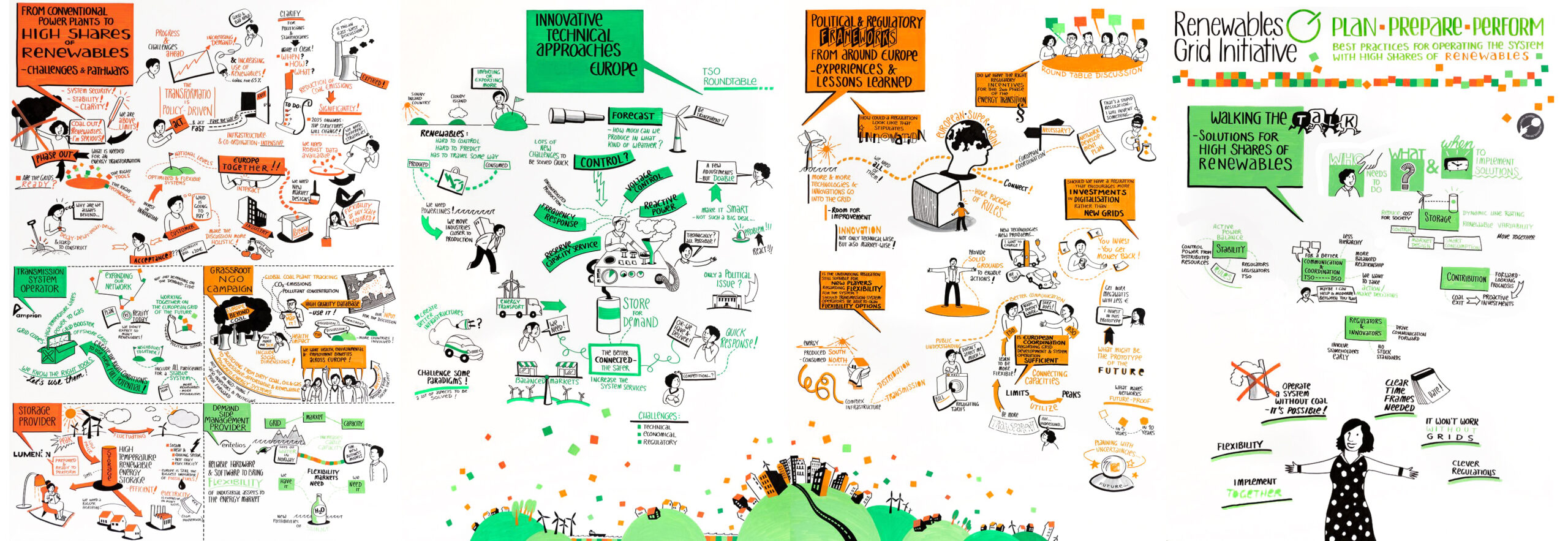
In the midst of these discussions, we collected and shared good practices and lessons learned from different European countries, asking:
- How can we achieve very high shares of renewables in the grid while maintaining the current level of stability?
- What are best practice examples from around Europe that show how high shares of renewables can go hand in hand with high stability?
- What are the main difficulties for a progressive coal phase out?
- What implications will a coal phase out have on system operation and how can we deal with them?
- What regulations and technology innovations are necessary to make a coal phase out and a high share of renewables possible?
- How do grid operators handle related challenges? What strategies do they have in place? What are possible restrictions (political or technological)?
The workshop was organised in collaboration with 50Hertz and German Watch, and was supported by ENTSO-E. Foresight Climate & Energy was the event media partner.
Downloads


Presentations
Event interviews
Photos

contact
Stephanie Bätjer
stephanie[at]renewables-grid.euDirector – Communication

Stephanie Bätjer
stephanie[at]renewables-grid.euDirector – Communication
related resources